Should Clients Consider Bifurcating Bill Review from Their ELM Vendor?
Published by Ajay Krishnan on Mar 20, 2026
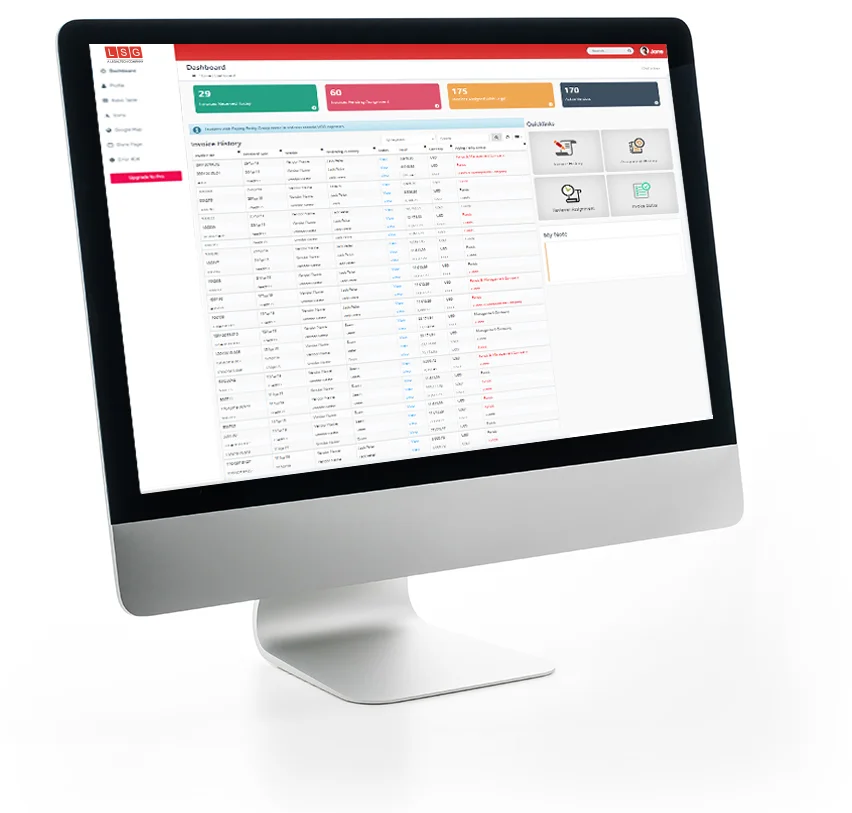
Many large enterprises rely on Enterprise Legal Management (ELM) systems to manage legal operations, track matters, and process invoices from outside counsel. These platforms are valuable for organizing legal data, managing vendors, and maintaining visibility across matters.
However, a growing number of legal operations leaders, general counsel, and finance teams are asking an important question:
Should legal bill review remain inside the ELM system, or should it be handled by a specialized solution?
This question is becoming increasingly relevant as organizations look for ways to reduce legal spend, improve billing accuracy, and speed up invoice approvals.
For companies processing thousands of legal invoices every year, even small billing inconsistencies can add up to significant financial impact.
Understanding the difference between ELM management and specialized bill review is becoming critical.
The Role of Enterprise Legal Management (ELM) Systems
ELM platforms are designed to centralize and organize legal operations. They typically support functions such as:
- Matter management
- Legal document tracking
- Law firm and vendor management
- Invoice submission workflows
- Budget tracking and reporting
These capabilities make ELM systems essential for managing the operational side of legal departments.
However, in many ELM platforms, invoice review is treated as a workflow step rather than a specialized financial analysis process.
Most systems rely on basic rule checks, such as:
- Rate validation
- Format checks
- Simple billing guideline enforcement
While useful, these checks often do not provide the depth of analysis required for complex legal billing structures.
Why Legal Bill Review Is More Complex Than It Appears
Legal invoices can contain hundreds of line items, covering research, drafting, internal discussions, court preparation, and administrative activities.
Each entry must be reviewed against multiple factors, including:
- Client billing guidelines
- Approved hourly rates
- Task relevance to the matter
- Time allocation across activities
- Compliance with legal policies
Manual review processes are time-consuming, and simple rule-based systems may overlook subtle inconsistencies.
Over time, these small issues can lead to significant legal spend leakage, especially for organizations managing high volumes of invoices across multiple law firms.
This challenge is one of the key reasons why many enterprises are now considering bifurcating legal bill review from their ELM system.
Why Organizations Are Separating Bill Review from ELM
Instead of relying solely on their ELM vendor, some enterprises are introducing specialized legal bill review solutions designed specifically for invoice analysis.
This approach allows organizations to maintain their existing ELM system while improving billing accuracy, review speed, and cost control.
Key advantages include:
1. Automation That Reduces Manual Work
Modern AI-powered review systems can automate over 95 % of the legal bill review process.
This dramatically reduces the manual effort required from legal operations teams and finance staff.
Instead of spending hours reviewing invoices line by line, teams can focus on final quality checks, approvals, and strategic cost management.
2. Faster Invoice Review and Approval Timelines
Manual reviews can slow down invoice approvals and create delays in payment cycles.
Automated review systems can analyze invoices within seconds, helping organizations significantly shorten the entire review and approval process.
Faster approvals can also improve relationships with outside counsel and allow companies to capture fast-pay discounts from panel law firms.
3. A More Cost-Efficient Pricing Model
Traditional legal bill review providers often charge a percentage of invoice value.
This means the cost of reviewing a $10,000 invoice is dramatically different from reviewing a $1 million invoice, even if the review effort is similar.
Specialized AI-driven solutions like Quark introduce a fixed or unit-based pricing model.
This means:
A $10,000 invoice and a $1 million invoice cost the same to review.
For enterprises managing high-value legal matters, this approach can reduce legal bill review costs to a fraction of traditional LBR services.
4. No Disruption to Existing IT Systems
One of the main concerns organizations have when introducing new technology is IT disruption.
Specialized bill review solutions can integrate directly with existing ELM platforms and ERP systems, allowing companies to enhance their invoice review process without replacing their current infrastructure.
In practice, this means organizations can keep their existing ELM system for legal operations while introducing automation for bill review.
The Rise of Context-Aware AI in Legal Bill Review
Modern legal bill review platforms are increasingly using context-aware AI systems designed specifically for billing analysis.
Unlike generative AI tools, these systems focus on structured financial accuracy and billing compliance.
They analyze invoices in the context of:
- Client billing guidelines
- Historical billing patterns
- Approved rate structures
- Task classification standards
- This approach helps identify issues such as:
- Duplicate billing entries
- Non-compliant billing tasks
- Incorrect billing categories
- Time allocation inconsistencies
By combining automation with contextual analysis, organizations can significantly improve billing accuracy while reducing operational workload.
A Smarter Approach to Legal Bill Review
Enterprise Legal Management systems remain essential for managing legal operations. However, legal bill review has evolved into a specialized financial control function that requires deeper analysis and automation.
By bifurcating bill review from their ELM vendor, organizations can introduce advanced automation, improve cost control, and reduce the operational burden on internal teams.
Solutions like Quark enable enterprises to:
- Automate over 90% of the legal bill review process
- Improve billing accuracy and compliance
- Shorten invoice review timelines
- Reduce bill review costs with fixed or unit-based pricing
- Integrate seamlessly with existing ELM and ERP systems
In short, Quark disrupts traditional legal bill review models without disrupting the client's IT infrastructure.
For organizations managing high volumes of legal invoices, this approach offers a practical way to achieve greater efficiency, transparency, and cost control.
To learn how Quark helps enterprises review legal invoices faster, more accurately, and at significantly lower cost, explore the Quark solution today.